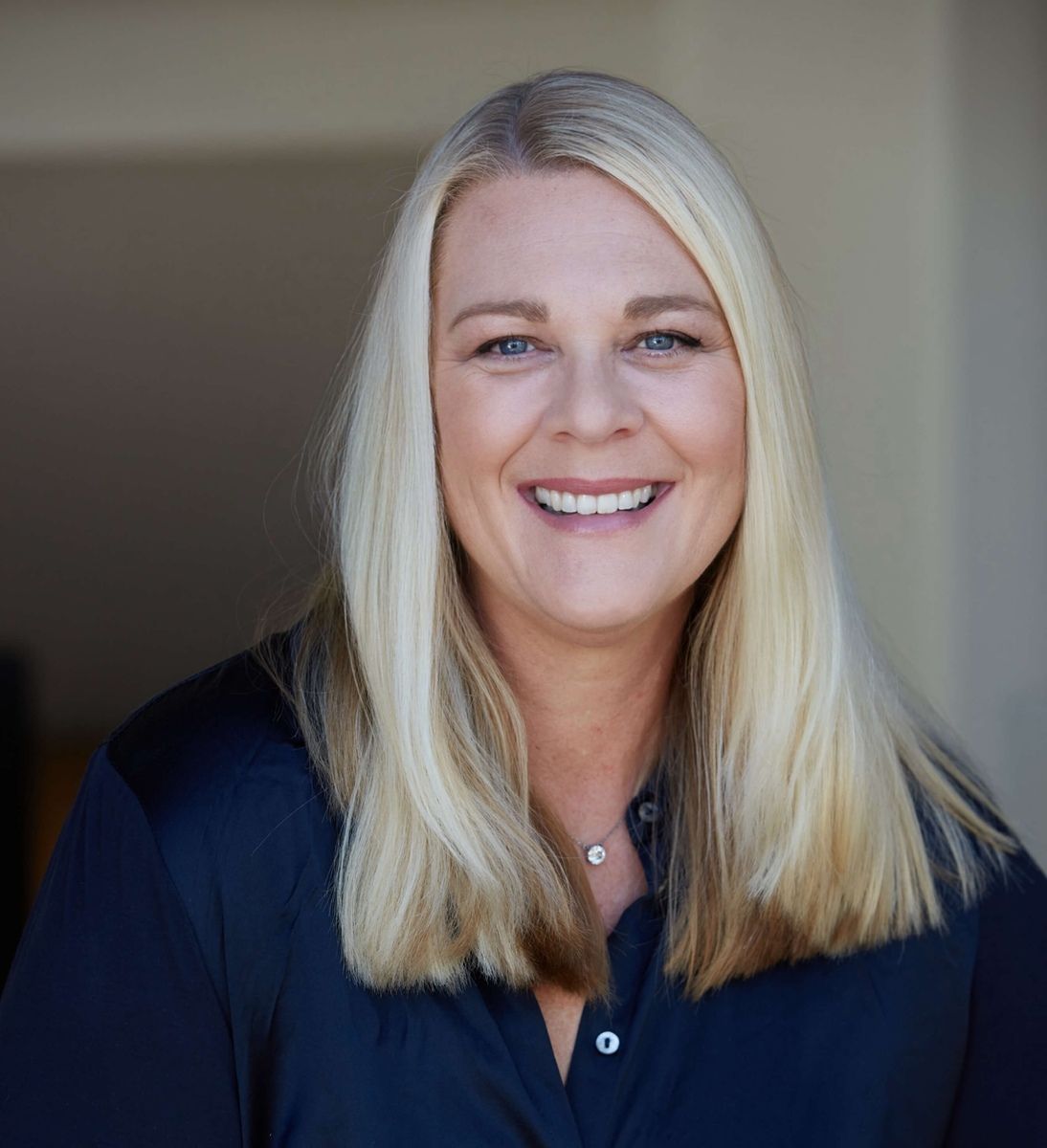

Welcome back to Healthy Innovations! 👋
In this issue we are deep diving into eye health – a field that's moved from managing vision loss to actively restoring sight.
AI systems are now screening for diabetic retinopathy in primary care clinics, bionic implants are helping blind patients read again, and the first stem cell-derived photoreceptor therapy has entered human trials.
It's a lot to cover, so let's get into it.
According to the World Health Organization, at least 2.2 billion people worldwide live with some form of vision impairment. Of these, 43 million are classified as blind, while an estimated 1.1 billion have avoidable or currently unaddressed sight loss. For decades, many of these conditions were considered irreversible.
That is changing rapidly.
A convergence of AI, gene therapy, stem cells, and bionic implants is transforming ophthalmology from a field focused on managing vision loss to one actively restoring sight. When surveyed about the most transformative trend in their field, 78% of ophthalmologists now point to AI as the clear frontrunner.
AI as the eye doctor's new partner
In 2018, the FDA cleared the first fully autonomous AI system in any field of medicine: a diabetic retinopathy screening algorithm. Today, four FDA-cleared AI systems can autonomously screen for diabetic retinopathy directly in primary care settings, without requiring an ophthalmologist to interpret the images.
These systems achieve sensitivity rates of 87-93% and specificity of 89-94%. More significantly, they are reaching patients who would otherwise go unscreened. With more than half of people with diabetic retinopathy remaining undiagnosed, AI screening in primary care clinics, pharmacies, and even homes is closing critical gaps.
The AEYE Health system, cleared in 2024, works with a handheld camera and produces results from a single image per eye in about a minute.

Beyond diabetic retinopathy, AI algorithms are now analyzing retinal images to:
predict glaucoma progression
guide treatment decisions for age-related macular degeneration
identify patients likely to respond to specific therapies.
The eye as a window to the body
Perhaps the most unexpected development is oculomics, a field that uses retinal imaging to detect systemic diseases far beyond the eye.
The retina is the only place in the body where blood vessels and neural tissue can be observed directly without surgery, making it a powerful diagnostic window.
AI models trained on retinal photographs can now predict cardiovascular risk factors and events with accuracy comparable to traditional risk calculators. Research from Singapore's National Eye Centre demonstrated that deep learning applied to nearly 285,000 patients could estimate age, smoking status, and five-year cardiac event risk from fundus images alone.
Other studies have shown retinal imaging can detect early signs of chronic kidney disease, Alzheimer's disease, and multiple sclerosis.
"The ultimate goal would be to have an AI system that could assess a routinely collected retinal image to predict a person's risk of heart attack or stroke, or to make an early diagnosis of metabolic diseases," says Professor Pearse Keane of Moorfields Eye Hospital, who coined the term oculomics in 2020.
Companies like Optain Health and Cascader are now commercializing these capabilities, positioning a 30-second eye scan as a full-body health check.

Bionic vision becomes reality
For patients who have already lost their photoreceptor cells, a remarkable solution is emerging: electronic retinal implants that restore functional sight.
The PRIMA system, developed at Stanford University and recently acquired by Science Corporation, has delivered groundbreaking results in clinical trials for advanced dry age-related macular degeneration.
The device consists of a 2-by-2-mm wireless chip implanted under the retina, paired with augmented reality (AR) glasses that capture images and project them as infrared light onto the implant. In a pivotal trial published in the New England Journal of Medicine in October 2025, over 80% of patients who completed the one-year study regained the ability to read. On average, patients improved by five lines on an eye chart.
The company is now seeking regulatory approval in Europe and has begun discussions with US regulators.

Gene therapy expands its reach
Since Luxturna became the first FDA-approved gene therapy for an inherited retinal disease in 2017, the pipeline has expanded dramatically.
Luxturna targets a specific mutation in the RPE65 gene that causes Leber congenital amaurosis, affecting roughly 8% of cases. More than 40 active clinical trials using viral vectors are now underway for various retinal diseases.
At ARVO 2025:
Opus Genetics presented 12-month data showing an 18-fold improvement in macular sensitivity for patients treated with OPGx-LCA5 for another form of Leber congenital amaurosis.
Atsena Therapeutics reported that seven of nine eyes treated with ATSN-201 for X-linked retinoschisis achieved closure of foveal schisis, with functional improvements in visual acuity.
Optogenetics represents a mutation-agnostic approach that could help far more patients.
In late 2025, Zhongmou Therapeutics received FDA clearance to begin US trials of ZM-02, an optogenetic gene therapy for advanced retinitis pigmentosa. Early results from their MOON trial in China showed legally blind patients regaining navigation capability and even returning to activities like cycling. The therapy bypasses degenerated photoreceptors entirely, instead making remaining retinal ganglion cells light-sensitive.
Optogenetics for vision involves adding light-sensitive proteins into surviving retinal cells (such as ganglion or bipolar cells) in a damaged retina, so that they can respond to light and send signals to the brain. This approach aims to restore some form of light perception or basic vision in people with certain types of blindness, like retinitis pigmentosa, by turning these engineered cells into artificial photoreceptors.
Stem cells enter the clinic
Cell replacement therapy has also reached a significant milestone.
In July 2025, BlueRock Therapeutics, a Bayer subsidiary, dosed the first patient in the CLARICO trial, the first clinical study of induced pluripotent stem cell-derived photoreceptors for inherited retinal diseases including retinitis pigmentosa and cone-rod dystrophy.
The therapy, OpCT-001, aims to replace degenerated photoreceptor cells with functional ones grown from donor stem cells.
"We aim to transform treatment options for patients facing irreversible vision loss," said Christian Rommel of Bayer. "OpCT-001 has the potential to restore vision for individuals with primary photoreceptor disease." The FDA granted both Fast Track and Orphan Drug designation to the program, reflecting the urgent unmet need among an estimated 110,000 people in the US with these conditions.
Japanese researchers have also shown promising results with iPSC-derived retinal organoid sheets, demonstrating cell survival at two years in transplanted patients with AMD.
From managing loss to restoring sight
A generation ago, ophthalmologists could do little more than slow the progression of most blinding diseases.
Today, AI algorithms are catching problems years before symptoms appear, gene therapies are correcting inherited mutations at their source, bionic implants are enabling the blind to read again, and stem cells are replacing lost photoreceptors with functional new ones.
The technologies remain expensive and access remains limited, but the direction is unmistakable. For the first time, ophthalmologists aren't just slowing vision loss - they're bringing sight back.
Innovation highlights
🔬 Tiny particles, massive potential. Researchers have created a new class of engineered nanoparticles that can hunt down and destroy disease-causing proteins anywhere in the body. These NPTACs (nanoparticle-mediated targeting chimeras) guide harmful proteins into the body's natural recycling system, where they're broken down and removed. The technology can even cross the blood-brain barrier, which could make it possible to treat conditions like dementia and brain cancer that have long been considered "undruggable."
🧠 Zap depression from home. The FDA just approved the first at-home brain stimulation device for depression. Flow Neuroscience's FL-100 uses transcranial direct current stimulation worn about 30 minutes daily. In clinical trials, patients saw an average 58% improvement in symptoms after 10 weeks compared to a control group. Side effects were mild and temporary. This gives the roughly one-third of depression patients who don't respond well to medications a new non-drug option. Available in the US later this year.
🤖 Smarter scans, saves lives. A landmark Swedish trial involving over 100,000 women found that AI-assisted mammography detects more breast cancers during routine screenings while reducing interval cancer diagnoses by 12%. Published in The Lancet, results showed 27% fewer aggressive cancers and 21% fewer large tumors in the AI-supported group. The technology also cut radiologists' workload by 44% without increasing false positives. As healthcare faces mounting staff shortages, AI-supported screening offers a compelling path forward for early detection programs.
Company to watch
🔬 Yosemite is a San Francisco-based venture capital firm with an ambitious goal: making cancer "non-lethal within our lifetime."
Founded in 2023 by Reed Jobs (son of Steve Jobs), the firm launched with backing from Memorial Sloan Kettering Cancer Center, MIT, John Doerr, and Laurene Powell Jobs' Emerson Collective. The firm has since attracted significant additional capital for a second fund, with major biopharma companies now among its investors.
Its portfolio spans gene therapy, epigenetic editing (Tune Therapeutics), AI-driven drug discovery (Chai Discovery), and AI-powered healthcare data tools like Fourier Health.
Yosemite also runs a philanthropic arm that makes unrestricted grants to academic researchers without taking IP rights. This creates a network of hundreds of cancer-research grantees, giving the firm early access to translational science and emerging company formations across the oncology ecosystem.

Weird and wonderful
🧸 Grown-ups want robo-cuddles. Turns out, China's adults are tucking themselves in with AI companions each night - and they're buying them by the millions. Transaction volumes for AI toys on Taobao (one of China's largest e-commerce platforms) jumped over 1,600% in 2025, while the Laolao Parrot toy alone sold nearly 7 million units.
In the Futurism article, Nancy Liu, 27, reports that she sleeps with her AI toy nightly, drawn to its simulated breathing and heating mechanism. "It feels like something is waiting for me," she says. "Not judging, not rushing — just there."
At CES 2026, Chinese companies made up 80% of the 60 AI companion toys on display. Meanwhile, Beijing regulators are eyeing crackdowns on AI that manipulates users' emotions.
So selling millions of cuddly robot bedmates? Totally fine. Just don't let them catch feelings.

Image source: Canva AI
Thank you for reading the Healthy Innovations newsletter!
Keep an eye out for next week’s issue, where I will highlight the healthcare innovations you need to know about.
Have a great week!
Alison ✨
P.S. ✅ Join over 750 healthcare leaders who get these insights delivered straight to their inbox! Healthy Innovations is read weekly by executives from AstraZeneca, GSK, Vertex, Roche, and leading academics, startup founders, agency teams, and investors. Subscribe now to stay ahead of industry trends!
