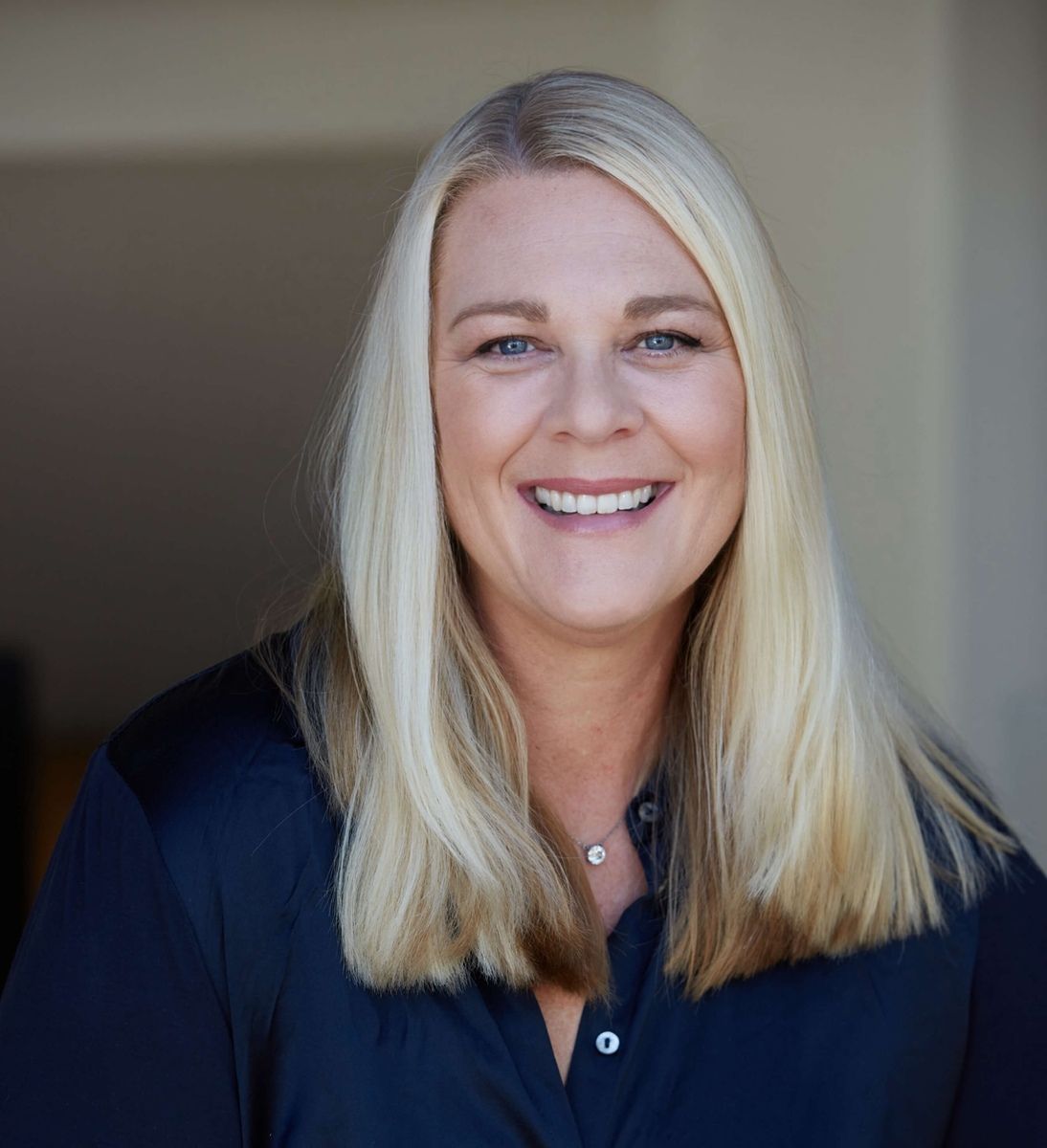

Welcome back to Healthy Innovations! 👋
This Thursday, May 21, is Global Accessibility Awareness Day – the 15th annual GAAD. Its purpose is simple: get everyone talking, thinking, and learning about digital access and inclusion, and the more than one billion people worldwide living with a disability or impairment.
Most of us take for granted picking up and using our digital devices to send messages, make calls, and access information related to our healthcare needs. But that is not everyone's reality, so this week's deep dive asks the question: why has digital health, a sector built to expand access to care, so often failed the people who need it most?
Let’s take a look.
It’s not about how disabled you are but how enabled you can be with the right tools and support - I believe anybody can be successful and has the right to be a valuable part of society.
Meet Molly
Molly Watt was born with significant hearing loss. By her mid-teens, she had also been registered legally blind. The condition is called Usher Syndrome, a genetic disorder that causes progressive vision loss alongside hearing impairment, with no cure and no warning of how fast it will move. Molly navigated childhood and adolescence with hearing aids, speech therapy, a rotating cast of specialists, and the kind of institutional resilience that people with complex conditions learn early.

Image from Molly Watt Trust
What she did not expect was that the UK’s National Health Service (NHS), the system built to care for her, would repeatedly behave as though her disability simply hadn't been updated in its records.
Her audiologist, fully informed of Molly's deaf-blindness diagnosis, continued using hand gestures Molly couldn't see. She was taken into bright rooms that worsened her remaining vision. Test results arrived in size 10 font on white paper, accompanied by tiny graphs: entirely inaccessible to someone with her level of sight loss. When she needed to order replacement hearing aid batteries, she was told to telephone the clinic or come in person. She couldn't hear on the phone. Traveling alone was not straightforward. None of this was flagged as a problem. These were, she was told, simply the rules.
This wasn't a story about one poorly-trained audiologist. It was a story about systems designed by people who never imagined Molly as their user.
Molly now works as an accessibility and usability consultant at Nexer Digital (see more below), advising clients that include the NHS, pharma giants and health insurance companies. She turned her experience of being failed by the system into a career helping to improve it.
The gap between promise and reality
The rise of digital health was supposed to fix accessibility. The shift to apps, patient portals, telehealth, and remote monitoring was framed, and genuinely intended, as a democratization of access. No more sitting in waiting rooms. No more geography as a barrier to specialist care. Healthcare, finally, on your terms.
For most patients, that promise has at least partially delivered. But for the 1.3 billion people globally living with a disability (16% of the world's population, according to the WHO) digital health has frequently created new barriers on top of existing ones. The design assumptions baked into most health tech are the assumptions of a sighted, hearing, dexterous, cognitively typical user. When those assumptions are wrong, the technology doesn't just fail to help, it actively excludes.
In the UK, Sense research suggests around half of people with complex disabilities report difficulty booking a GP appointment online.
Office for National Statistics (UK) data indicates that millions of disabled UK adults are not regular internet users. The NHS App's 37 million sign-ups represent a population from which some of the most vulnerable patients are structurally absent.
The NHS has started benchmarking its digital services against the Web Content Accessibility Guidelines (WCAG), the main technical standard for web and app accessibility, even as its own accessibility statement concedes the NHS App is still only partially compliant.
In the US, more than 70 million Americans live with a disability. Multiple studies and reviews have found that telehealth platforms remain largely inaccessible across cognitive, hearing, and visual impairments, despite telehealth becoming a permanent fixture of American healthcare post-COVID.
Patient portals routinely fail screen reader compatibility testing. Wearable health monitors assume the user can see a display, pair a device via a barcode scan, and read a graph. Many cannot.
Why it keeps happening
The core problem is not malice. It is the design pipeline.
Health tech is predominantly built by people without disabilities, tested on people without disabilities, and validated in studies where participants with significant impairments are routinely excluded. WCAG compliance is treated as a legal floor to clear, not a design ambition to reach. And even where compliance is nominally achieved, passing an automated audit and being genuinely usable by someone with Usher Syndrome are very different things.
The structural failure runs in three layers:
Design: Products are built around the assumed majority user. Disabled users are considered during Quality Assurance (QA), if at all.
Research: Clinical trial populations in digital health routinely exclude participants with significant cognitive or sensory impairments, on the grounds that they complicate data collection. The evidence base systematically understates both need and opportunity.
Investment: Investors follow evidence. Evidence follows trials. Trials exclude the people who need it most.
The scale of the market opportunity this creates is staggering. The global spending power of people with disabilities is estimated in the trillions. Assistive tech companies raised hundreds of millions in equity funding in 2025, with strong year-on-year growth. But the proportion of that capital directed specifically at digital health access, rather than physical assistive devices, remains thin.
Who is starting to do it differently
A small number of companies are building accessibility in from the foundation rather than bolting it on afterward, and the contrast with the mainstream is instructive.
Cephable (US) builds AI-powered adaptive input technology that lets people control computers, health apps, and digital interfaces using:
Voice commands
Head movement
Facial expressions
Switches and alternative input devices

Image source: Cephable
This removes the foundational assumption that every user has reliable fine motor control. What sets Cephable apart is not just the technology but the build process: the company reports that 75% of its team members identify as having a disability, and its Cephable Consortium brings in people with cerebral palsy and other conditions to shape product decisions at every stage, as co-designers rather than testers.
Its logic is straightforward: the best health tech doesn't work for one type of user. It works because its foundations are inclusive.
That logic echoes something well-understood in physical design and too rarely applied digitally. Curb cuts were built for wheelchair users; they made life easier for parents with strollers, delivery workers, and cyclists everywhere. Electric toothbrushes were designed for people with limited dexterity, then became the default for everyone. Accessible design is not a compromise. It is frequently better design.
CareWindow, an Australian startup that completed the Remarkable Disability Tech Accelerator in 2024, has taken a different approach: hardware. It has built what it calls the world's simplest videophone, a purpose-designed device that:
Auto-answers incoming calls, requiring no screen navigation
Uses a spill-proof, fall-resistant chassis
Includes lockout settings for people with impulse control challenges associated with dementia

Image source: CareWindow
Its target population is people who cannot use a smartphone due to dementia, unsteady hands, or cognitive impairment. The telehealth angle is direct: physical therapists, speech pathologists, and other remote care providers use the platform to reach patients they could not previously serve at all.
Neither company is yet at scale. But both are demonstrating that designing for the hardest use case from the start, rather than accommodating it after the fact, produces something fundamentally different from the accessibility-as-afterthought approach that dominates the sector.
What comes next
The regulatory environment is tightening in both markets:
US: ADA Title II requires state and local government digital services to meet WCAG 2.1 AA accessibility standards and is now being enforced. Healthcare organizations serving Medicaid and Medicare populations are in scope.
UK: NHS England has made digital inclusion commitments as part of its long-term digital strategy, with accessibility and adaptive design flagged as priorities for the NHS App going forward.
The tide is moving. Slowly, but in one direction.
For the founders and investors reading this: the window to build this well is now. The companies that get there first will not only do the right thing. They will own the infrastructure of healthcare access for a population that has been systematically overlooked for a decade.
Molly Watt did not accept those barriers as inevitable. She went on to work as an accessibility consultant, brief policymakers, and speak to clinicians and leaders at institutions including the UK Parliament and Harvard Medical School.
The NHS did not fail her because her needs were exceptional. It failed her because the system was built as if people like her were not expected to use it.
Innovation highlights
🩹 AI patch for hormones. Standard fertility tests measure hormone levels. A new AI-powered wearable patch, developed by Oxford researchers, tracks hormone timing instead – and finds that plenty of people with "normal" results have disrupted rhythms that standard tests miss entirely. Tested across 414 men and women, it predicted infertility more accurately than conventional testing. The implication: infertility may often be a disorder of hormonal timing, not hormonal quantity.
🫀 This wearable could save your life. A chest-worn wearable developed by researchers continuously tracks heartbeat, skin temperature, and breathing, converting the data via machine learning into real-time measures of psychological and physiological stress. Unlike existing devices that monitor one or two parameters, this one captures the full picture. In trials it detected sleep apnea in children, identified stress signatures in emergency medicine training, and yes, matched gold-standard polygraph accuracy.
🧬 AI learns to eavesdrop on your cells. Cells talk. When those conversations go wrong, disease follows. Researchers have built an AI platform, iS2C2, that decodes cell-to-cell communication networks in real time, identifying where signals have broken down and why. Applied to Alzheimer's datasets it uncovered previously unknown communication pathways in neurons. Applied to bone cancer data it identified an existing breast cancer therapy that could block metastatic spread earlier. The platform works even with incomplete datasets, which in real-world research is most of the time.
Company to watch
📐 Most agencies talk about accessibility. Nexer Digital is built around it. The UK-based design and development agency, headquartered in Macclesfield with offices in Cambridge, specialises in creating digital products that are genuinely inclusive rather than merely compliant – and there is a difference. Where most digital teams treat accessibility as a final QA step, Nexer embeds co-design with real users, including people with diverse abilities and low digital literacy, from the very start of a project.
Its clients include NHS England, Bupa, AstraZeneca, and the Department for Education. In healthcare specifically, Nexer has audited GP surgery websites across the UK, finding that two-thirds had detectable accessibility errors – and has worked directly with NHS trusts to fix them. It also runs Camp Digital, a well-regarded UX and design conference in Manchester that has become a focal point for the UK's inclusive design community.

Camp Digital 2026. Image sourced from Manchester Digital
Weird and wonderful
🥚 Eggs for your brain. Scientists have spent decades telling us what not to eat for breakfast. Eggs have had a particularly rough ride – vilified for cholesterol, rehabilitated, vilified again, rehabilitated again. Now a 15-year study of nearly 40,000 participants by Loma Linda University has found that eating at least one egg a day, five days a week, is associated with a 27% reduction in Alzheimer's risk. Even eating eggs just one to three times a month was linked to a 17% reduction. The egg, it turns out, has been quietly doing neurological work while we were busy eating cereal and toast.
The mechanism is legitimate: eggs contain choline, lutein, omega-3 fatty acids, and vitamin B12, all of which play documented roles in brain function and neuronal communication. More than 7 million Americans are currently living with Alzheimer's, so the most cost-effective brain health intervention may have been sitting in your fridge the whole time!

Thank you for reading the Healthy Innovations newsletter!
Keep an eye out for next week’s issue, where I will highlight the healthcare innovations you need to know about.
Have a great week!
Alison ✨
P.S. If you enjoyed reading the Healthy Innovations newsletter, please subscribe so I know the content is valuable to you!
