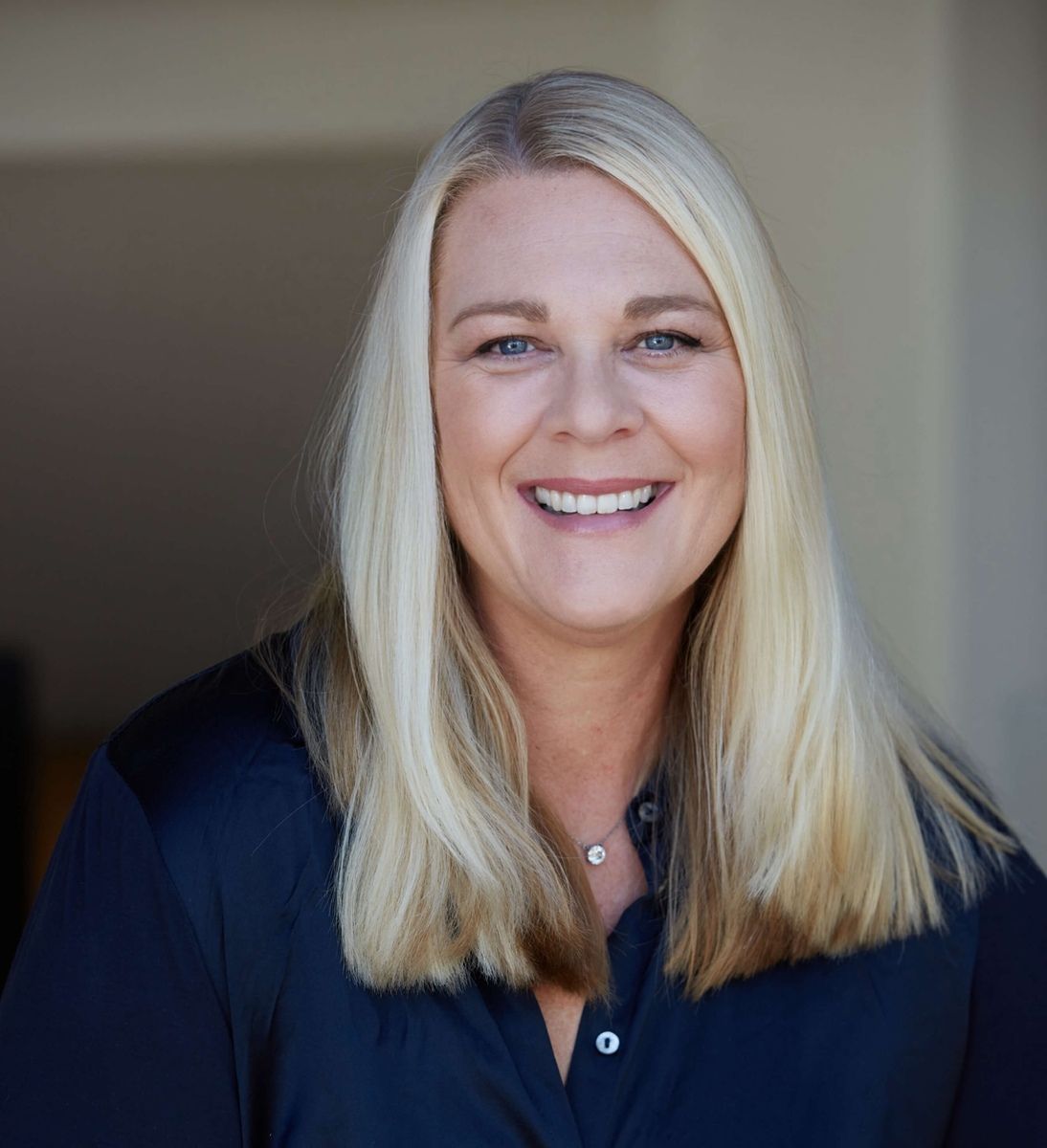
Welcome back to Healthy Innovations! 👋
I grew up on Sydney's beaches in the 1980s, so the phrase "Slip, Slop, Slap" is ingrained in me. Slip on a shirt, slop on sunscreen, slap on a hat – the mantra hammered into sun-loving Australians as skin cancer rates climbed. It worked, to a point. But for patients whose melanoma had already spread, the outlook for most of that era was grim.

Image source: Powerhouse Collection
That has changed dramatically, and in this week’s deep dive I want to focus on one of the most striking reasons why. Immunotherapy transformed survival for advanced melanoma patients over the past decade – and now a one-time cell therapy that uses a patient's own tumor-hunting immune cells is pushing the boundary further, with five-year data to back it up.
Let’s dive in!
A one-time, personalized cell therapy
In 2023, Zoe Phillips, 46, from Dorset, was diagnosed with stage 4 metastatic melanoma, two years after being treated for skin cancer on her neck. When she was referred to The Royal Marsden NHS Foundation Trust, her options were running out. She joined a clinical trial for a treatment most oncologists were still watching cautiously from the sidelines. Six weeks after receiving it, her scans showed no tumours. None.
"Before coming to The Royal Marsden I was told that I would probably die," she said. "Hearing that my treatment had been successful was amazing, I was over the moon. This trial has saved my life and enabled me to continue making memories with my husband and daughter."
Zoe's treatment was lifileucel – a one-time, personalized cell therapy that harvests a patient's own immune cells from inside their tumor, expands them by the billions in a lab, and reinfuses them to fight the cancer they originally came from. It is called TIL therapy, for tumour-infiltrating lymphocytes. And after decades of research, it has become the first FDA-approved T-cell therapy for a solid tumor cancer – a milestone that matters far beyond melanoma.
What TIL therapy actually is
To understand why this is significant, it helps to understand why advanced melanoma has been so hard to treat. Melanoma is one of the most aggressive cancers. When it reaches stage 4 and spreads to distant organs or the brain, conventional treatments have historically offered limited and often short-lived benefit. Even the checkpoint inhibitor immunotherapies that transformed the field over the past decade leave a substantial number of patients without lasting response.
TIL therapy works on a different logic. Rather than introducing a new drug into the body or blocking a specific protein pathway, it identifies immune cells that have already found their way inside the tumor – cells that have, in effect, already recognised the cancer as a target.
The process has four main steps:
Extract: TIL cells are removed from a surgically resected tumor sample and sent to a specialist manufacturing facility
Expand: The cells are multiplied into a therapeutic army numbering in the billions
Prepare: The patient receives a short course of lymphodepleting chemotherapy to ready their immune system
Reinfuse: A single, one-time infusion of the patient's own expanded TIL cells is given, followed by a short course of a cytokine called IL-2 to sustain them

Image source: Iovance Therapeutics
The critical word in that process is one-time. Once the cells are reinfused, there is no maintenance dose, no ongoing treatment schedule. The therapy either works, or it doesn't.
What makes this different from CAR T-cell therapy: Unlike CAR T-cell therapies, which are genetically engineered to recognise a specific target, TIL cells come directly from the tumor and already recognise a wide range of targets on cancer cells – giving them a broader fighting capacity against solid tumors.
What the five-year data shows
The global Phase 2 C-144-01 trial, which included The Royal Marsden as the lead UK centre, has now published its longest follow-up to date – five years. The results were presented at the American Society of Clinical Oncology (ASCO) annual meeting in 2025, and they are not easy to dismiss.
Across 153 patients who received a single infusion of lifileucel, all of whom had already failed on standard checkpoint inhibitor immunotherapy, the five-year results were notable:
An objective response rate of around 31.4% – meaning nearly one in three patients saw meaningful tumor reduction
79.3% of patients had some reduction in tumor burden – meaning the therapy was doing biological work even in patients who did not meet the formal response threhold
31.3% of responders still in response at five years
Around 6% achieved a complete response – no evidence of cancer
Some responses deepened over time, improving from partial to complete more than a year after a single treatment
No new or delayed safety signals over the full five-year follow-up.
For a population with few, if any, remaining options, durable responses of this kind are clinically meaningful. They are also, for now, the exception rather than the rule.
The US FDA granted lifileucel accelerated approval in February 2024, making it the first FDA-approved T-cell therapy for any solid tumor cancer, under the brand name Amtagvi, manufactured by Iovance Biotherapeutics.
The gap between approval and access
This is where the story gets more complicated. Ken Herich, 68, a builder and avid skier from Sun Valley, Idaho, reached TIL therapy only after Keytruda failed, then a combination of nivolumab and relatlimab also failed. His oncologists at City of Hope told him they had nothing further to offer – until they mentioned a newly approved treatment they were just beginning to use. "If it hadn't worked," said his oncologist Yan Xing, MD, "he'd be in hospice by now."
That path – through multiple immunotherapy failures before reaching TIL – reflects the reality for most patients who receive it today. And it points to a larger problem: TIL therapy is complex to deliver in ways that most cancer treatments are not.
Several barriers limit who can access it:
The process from tumor collection to reinfusion takes roughly a month
Patients need to be healthy enough to tolerate lymphodepleting chemotherapy before the infusion
Manufacturing requires specialist cell therapy facilities with limited capacity
In the US, a single treatment carries a list price of over 500K USD – a figure that puts it on a par with CAR T-cell therapies, where insurance coverage has been inconsistent and reimbursement negotiations are ongoing.
Outside the US, access is narrower still.
In the UK, lifileucel is available through clinical trials at authorized centres including The Royal Marsden, but NICE has issued draft guidance not recommending it for routine NHS use – citing uncertainty around long-term benefit and cost-effectiveness. That position is subject to appeal and final guidance is pending, so the picture in England may yet change. Across much of Europe, Asia, and lower-income settings, it remains inaccessible outside research programmes.
The Phase 3 TILVANCE-301 trial is currently enroling patients to evaluate lifileucel in combination with pembrolizumab as a first-line treatment – a setting where responses in earlier lines of therapy have historically been stronger. These results will determine whether TIL therapy moves from a last-resort option to an earlier standard of care. Full FDA approval, broader global regulatory decisions, and NICE's final guidance in England will all depend on what this trial shows.
Next-generation TIL therapies
The field is not standing still. Researchers are already working on next-generation TIL approaches across several fronts:
Removing the requirement for pre-infusion chemotherapy – a significant barrier for patients already taxed by previous treatment
Genetic engineering of TIL cells to make them more potent or extend their activity inside the tumor
Expanding beyond melanoma into lung cancer and other solid tumors where the same logic applies.
The next frontier: predicting who benefits
The five-year data from C-144-01 also raises something the field is still working to answer: why do some patients respond deeply and durably while others don't? Identifying the biomarkers that predict response could let clinicians select patients more precisely – and avoid putting non-responders through an intensive and costly treatment process. That work is actively underway, though no validated predictor has yet reached clinical use.
Advanced melanoma is no longer the near-certain death sentence it was fifteen years ago. TIL therapy won't work for everyone, and reaching it still requires navigating a system that isn't built for easy access. But for the patients it does reach, it is offering something most cancer treatments can only promise – one treatment, using their own cells, enough to stop a cancer that had already beaten everything else.
Innovation highlights
🧠 A headband that reads the brain. A startup called brain4care has developed a non-invasive sensor worn on a headband that detects micro-movements of the skull linked to heartbeats – giving clinicians a real-time window into the brain without drilling into the skull. In a five-year clinical study, patients monitored with the device had a mortality rate of 5.88% versus 37.25% in the standard care group, and were discharged home twice as often.
🍟 Design cards for mindful eating tech. Millions of people struggle with problematic eating, but many digital tools claiming to help are built without grounding in health science. Researchers have developed MEDEC – a deck of 28 evidence-based design cards that help app developers, wearable designers, and health practitioners build mindful eating technologies that are actually aligned with clinical research. Evaluated by 36 mindful eating experts, the cards cover everything from bite size awareness to hunger cue recognition across mobile apps, smart tableware, and wearables.
💊 AI designs an antibiotic from 46 billion compounds. Researchers used a generative AI model called SyntheMol-RL to design a new antibiotic – synthecin – that fully arrested MRSA growth in a mouse wound infection model. The algorithm uses reinforcement learning to search a chemical space of 46 billion compounds for candidates that are both potent and easy to synthesise, cutting the time from target to testable molecule dramatically. The researchers say the model is disease-agnostic and could be applied to diabetes, cancer, and beyond.
Company to watch
One of the biggest barriers to TIL therapy reaching more patients is the treatment's intensity – particularly the high-dose IL-2 infusions required after the cell infusion to keep the new immune cells alive and active.
Cambridge, Massachusetts-based Obsidian Therapeutics is working to change that. Its lead programme, OBX-115, is an engineered TIL therapy that carries its own built-in survival signal – a regulatable form of IL-15 – eliminating the need for toxic high-dose IL-2 altogether. Patients in early trials also received approximately half the standard lymphodepleting chemotherapy dose, with one treated entirely as an outpatient.
In the Phase 1/2 Agni-01 multicenter study, OBX-115 produced a 67% objective response rate and 100% disease control at the recommended Phase 2 dose in heavily pretreated advanced melanoma patients – with no systemic IL-2 administered. Phase 2 results are being presented at ASCO 2026 in May. If they hold, OBX-115 could be the version of TIL therapy that finally reaches patients who can't tolerate the current regimen.

Image source: Obsidian Therapeutics
Weird and wonderful
📸 Your face is a health report. Researchers at Mass General Brigham have developed FaceAge, an AI tool that estimates biological age from a single photograph – and in patients with cancer, it turns out your face knows things your medical chart doesn't.
A new study in Nature Communications analysed two photos of 2,279 cancer patients taken at different points during treatment and found that patients whose faces aged faster than their chronological age had significantly worse survival outcomes. The effect was strongest when photos were taken two or more years apart. Patients with cancer appeared, on average, about five years older than their actual age.
The research team has now launched a web portal where the public can submit their own photo and get a FaceAge assessment. Proceed with caution – some readings are best left unknown.

Thank you for reading the Healthy Innovations newsletter!
Keep an eye out for next week’s issue, where I will highlight the healthcare innovations you need to know about.
Have a great week!
Alison ✨
P.S. If you enjoyed reading the Healthy Innovations newsletter, please subscribe so I know the content is valuable to you!
